
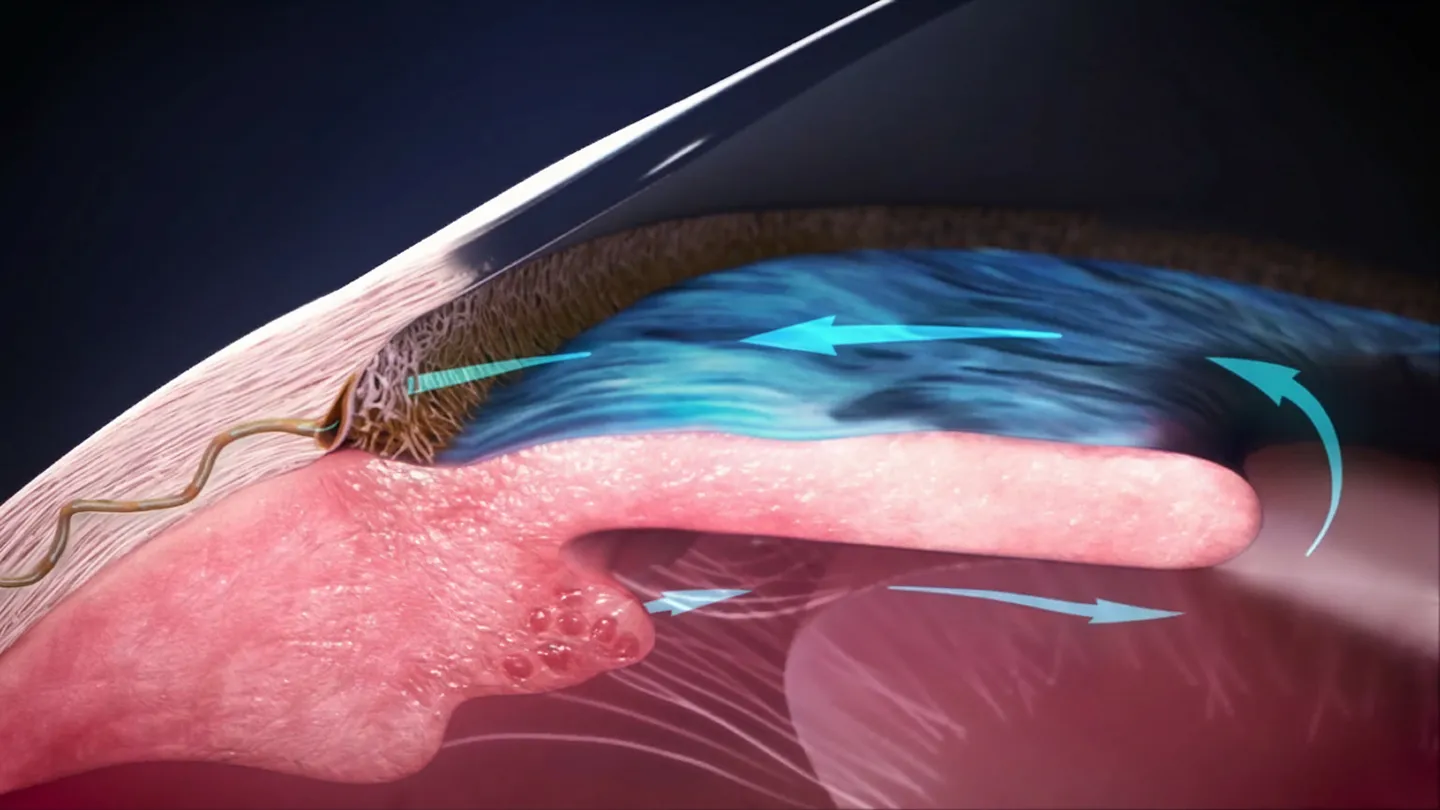
Canaloplasty is a minimally invasive glaucoma surgical procedure designed to improve conventional outflow using 360° microcatheterization and pressurized viscodilation. The goal is to enhance flow through the trabecular meshwork, Schlemm’s canal and collector channels while working with the eye’s natural drainage anatomy. Microcatheter-based systems such as iTrack™ Advance support this approach with illuminated navigation and pressurized viscoelastic delivery.

Designed To Work With Natural Outflow Physiology
Canaloplasty addresses the conventional outflow pathway — viscodilating Schlemm's canal and opening collector channels to restore the eye's natural drainage system (1). No implant—just a procedure designed to treat the underlying resistance, not bypass it.

Proven Safety
Designed to work with patient physiology and without the need for any hardware, canaloplasty is reported to have a robust safety profile. In a prospective, real-world study of 254 patients (344 eyes), intraoperative complications were rare, with only one case (0.3%) of Descemet's membrane detachment reported. Postoperatively, adverse events occurred in 2.3% of eyes (n = 8). (2)

Real-world Credibility
Published outcomes from the iTrack Global Data Registry (iTGDR)—run through the independent International Glaucoma Surgery Registry (IGSR)—confirm that canaloplasty delivers consistent results across 12 sites in five countries, reflecting real-world data from different clinics, workflows, and patient populations. It's not one clinic's protocol—it's reproducibility across centers, countries, and case mixes. (2)






Nova Eye Medical, equips your surgeons with the best equipment for a non-destructive, long-term, patient care focused solution.